Costs & planning
What actually drives the cost of a paver patio
Two patios the same size can differ enormously in price. Here is what moves the number, and which savings cost you more later.
Read →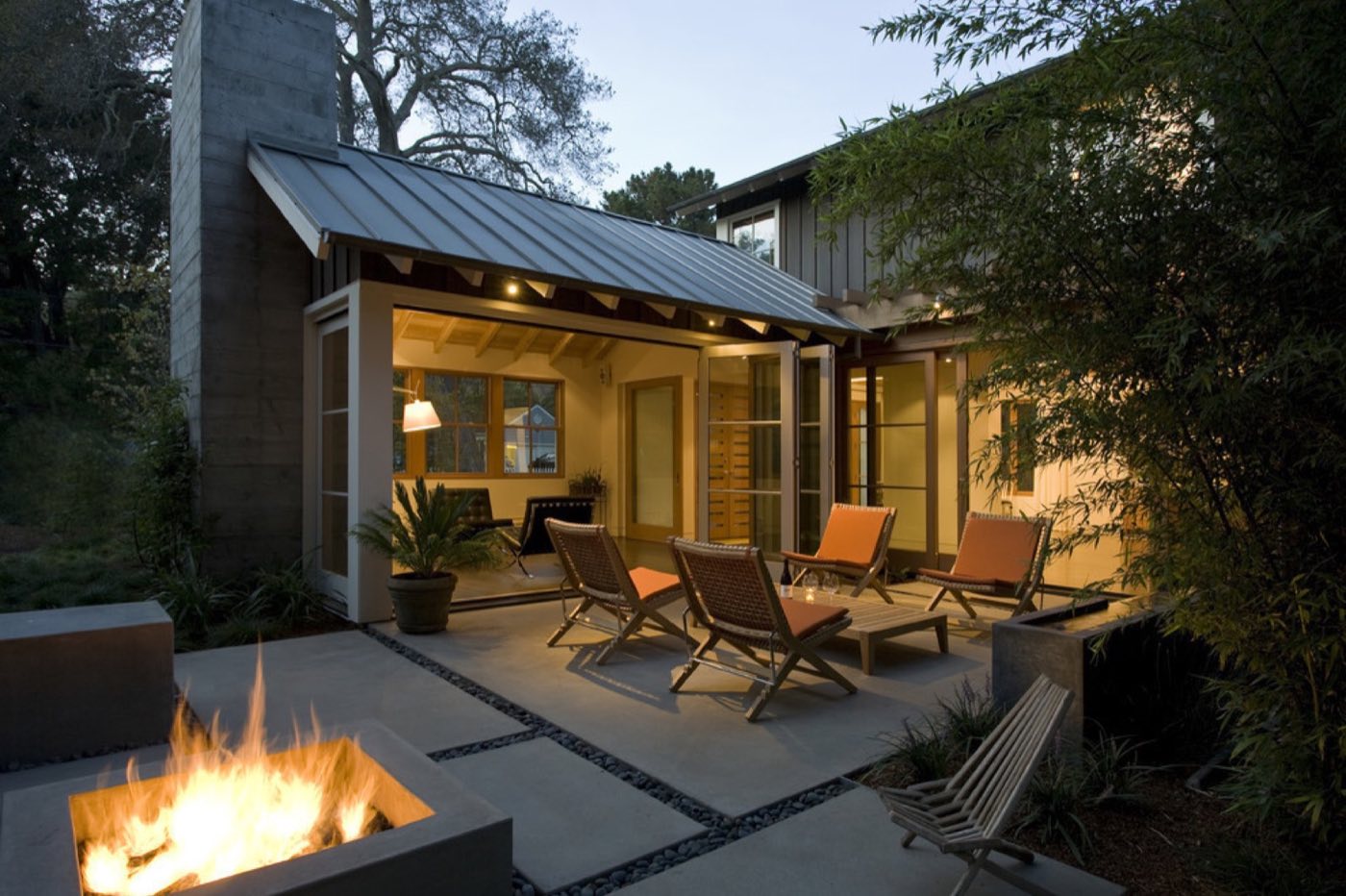
Materials · 5 min read
Both work here. But our clay and our freeze-thaw cycles push the answer one way more often than the other.
Introduction
This is the most common question we get asked, and the honest answer is that both work in the Piedmont — we install both. What decides it is usually not looks or even price, but how the ground under it moves.
(01)
Piedmont red clay is expansive. It takes on water and swells, dries out and shrinks, and it does this every year. Add the freeze-thaw cycling a North Carolina winter delivers and you have ground that never quite sits still.
A poured concrete slab is one rigid piece. When the ground beneath it moves unevenly, the slab has two options: stay rigid and crack, or move as one and tilt. Control joints tell it where to crack, which helps, but they do not stop it.
A paver surface is hundreds of small pieces on a flexible base. When the ground moves, the surface flexes with it. That is the core argument for pavers here, and it is a good one.
(02)
This is where the gap is widest.
If a tree root lifts three pavers, we lift those three pavers, fix the base and put them back. Done in a morning, and when it is finished you cannot tell.
If a tree root lifts a concrete slab, you are cutting out a section and pouring new concrete against old. It will never match — colour, texture and age all differ — and the joint between them is a permanent line.
The same applies to anything that needs to go under the surface later: a gas line to a fire pit, a conduit for lighting, an irrigation repair.
(03)
We are not anti-concrete, and there are jobs where it is the better answer.
Large uninterrupted areas are cheaper in concrete. <a href="/pool-deck">Pool decks</a> where you want a seamless surface with no joints to trap grit can be excellent in concrete. <a href="/custom-concrete">Stamped and stained concrete</a> can produce looks that are difficult or expensive to achieve in unit pavers. And on a genuinely stable, well-drained site, a properly poured and reinforced slab will last a long time.
(04)
Slopes, tight access, anything near a <a href="/retaining-walls">retaining wall</a>, sites with known drainage issues, and any project where you might want to change something later.
Permeable paver systems also let water through the surface rather than pushing it somewhere else — genuinely useful on a lot where runoff is already a problem.
(05)
Concrete fails by cracking, by spalling at the surface after freeze-thaw, and by settling unevenly at one corner. None of these are repairable invisibly.
Pavers fail by settling where the base was inadequate, by joint sand washing out, and by edges spreading where there is no restraint. All three are repairable, and all three are avoidable by building the base properly in the first place — which brings it back to the same point either way.
(06) Questions
Related services
More from the blog
All articles →Costs & planning
Two patios the same size can differ enormously in price. Here is what moves the number, and which savings cost you more later.
Read →Retaining walls
Almost every failed wall we are called to has the same three causes. None of them is the block.
Read →Materials
Heat underfoot, freeze-thaw, shade and algae. Five surfaces, and what each is genuinely good and bad at here.
Read →Free on-site estimate
Tell us what you have in mind. We come out, walk the ground with you, and put a clear written estimate in your hands.
Request an estimate
Send the details and we will come out, walk the ground with you, and put a clear written estimate in your hands. No cost, no obligation.