Costs & planning
What actually drives the cost of a paver patio
Two patios the same size can differ enormously in price. Here is what moves the number, and which savings cost you more later.
Read →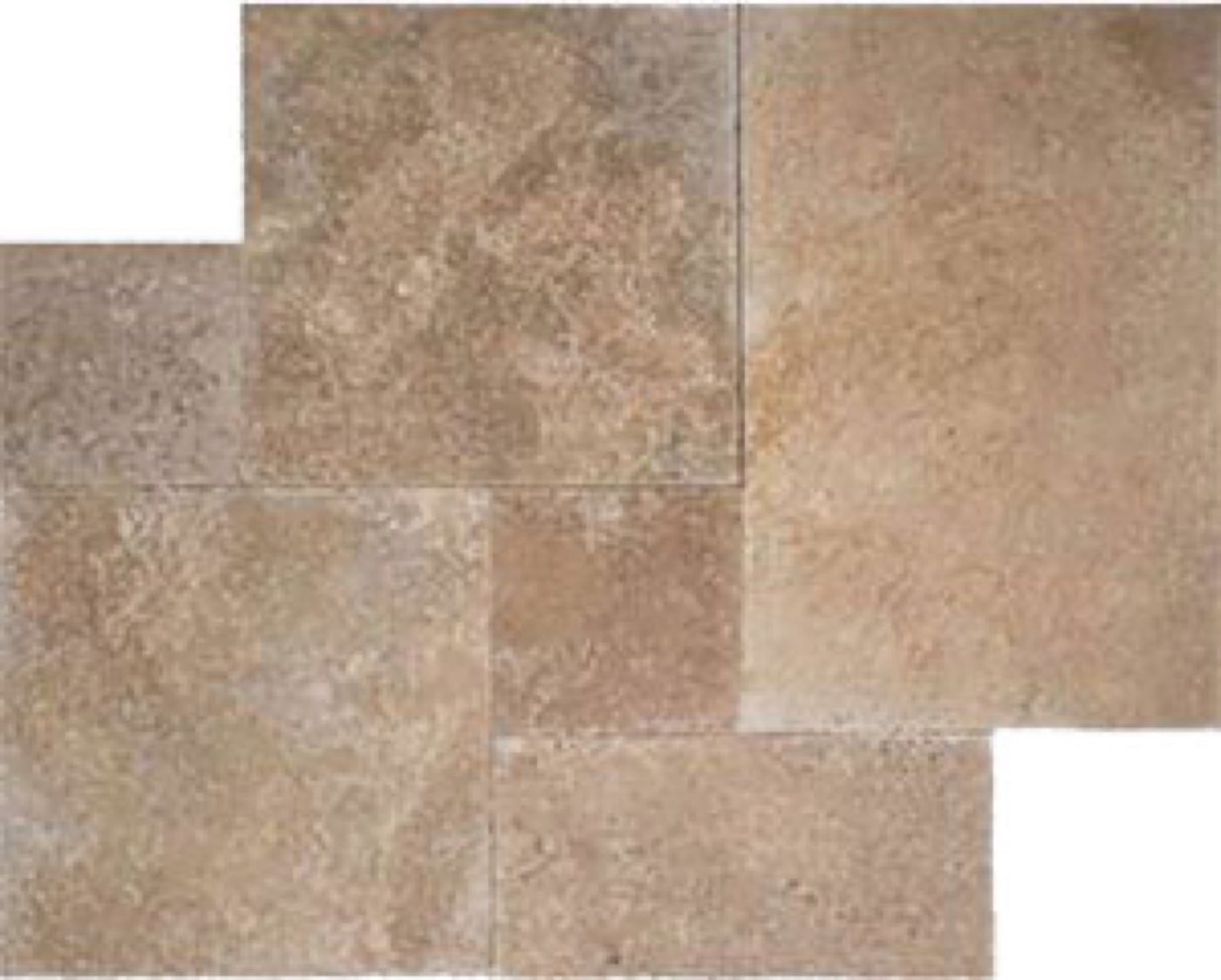
Materials · 7 min read
Heat underfoot, freeze-thaw, shade and algae. Five surfaces, and what each is genuinely good and bad at here.
Introduction
Material choice gets made on a showroom sample board, and then it has to live outdoors in North Carolina. Our summers put surfaces in direct sun for months; our winters cycle above and below freezing repeatedly; and shaded lots stay damp long enough to grow things.
Here is how the five materials we install most often actually behave here.
(01)
<a href="/travertine-patios">Travertine</a> is the material we recommend most often for <a href="/pool-deck">pool surrounds</a>, for one reason: it stays noticeably cooler in direct sun than almost anything else. On a July afternoon that is not a luxury, it is the difference between a deck people use barefoot and one they do not.
It is a natural stone, so it varies — that is part of the appeal. It is porous, which means sealing matters, and it will patina over time rather than staying factory-new.
(02)
<a href="/porcelain-paver-patio">Porcelain pavers</a> are the most dimensionally consistent and the least absorbent thing we lay. They resist staining, they do not fade, and freeze-thaw does very little to them because there is minimal water getting in to freeze.
The trade-off is that they read as a manufactured product, because they are one. Large format porcelain also needs a very flat, very well-prepared base — there is no forgiveness in a 24-inch tile.
(03)
<a href="/flagstone-patio">Flagstone</a> is irregular natural stone, and on the right house — particularly older <a href="/davidson-hardscapes">Davidson</a> properties and wooded lots — nothing else looks as settled.
It is slower to lay because every piece is fitted, which shows in the price. Set in mortar it is very stable; set in sand it is more forgiving of ground movement but needs joint maintenance. Its texture makes it good underfoot when wet, which matters in shade.
(04)
<a href="/brick-paver-patio">Clay brick pavers</a> hold their colour permanently, because the colour is fired through the clay rather than applied. A brick patio looks essentially the same in twenty years as it did in year one.
In a town like <a href="/huntersville-hardscapes">Huntersville</a> or Davidson, where a lot of houses are brick, this is often less about fashion and more about matching the building you already own.
(05)
Manufactured concrete pavers — Techo-Bloc, Belgard, Unilock — give the widest choice of shape, colour and texture, and they are usually the most cost-effective way to cover a large area well.
They will fade slightly over years of UV exposure, more noticeably in strong colours than in muted ones. Modern lines have improved a great deal on this. They are the workhorse of <a href="/paver-patios">paver patio installation</a> for good reason.
(06)
A shaded patio is a different problem to a sunny one. It stays damp, and damp surfaces grow algae and moss regardless of material. Under a canopy, prioritise texture and drainage over colour, and expect <a href="/paver-clean-seal">cleaning and sealing</a> to be a real part of ownership rather than an optional extra.
(07) Questions
Related services
More from the blog
All articles →Costs & planning
Two patios the same size can differ enormously in price. Here is what moves the number, and which savings cost you more later.
Read →Materials
Both work here. But our clay and our freeze-thaw cycles push the answer one way more often than the other.
Read →Retaining walls
Almost every failed wall we are called to has the same three causes. None of them is the block.
Read →Free on-site estimate
Tell us what you have in mind. We come out, walk the ground with you, and put a clear written estimate in your hands.
Request an estimate
Send the details and we will come out, walk the ground with you, and put a clear written estimate in your hands. No cost, no obligation.