Costs & planning
What actually drives the cost of a paver patio
Two patios the same size can differ enormously in price. Here is what moves the number, and which savings cost you more later.
Read →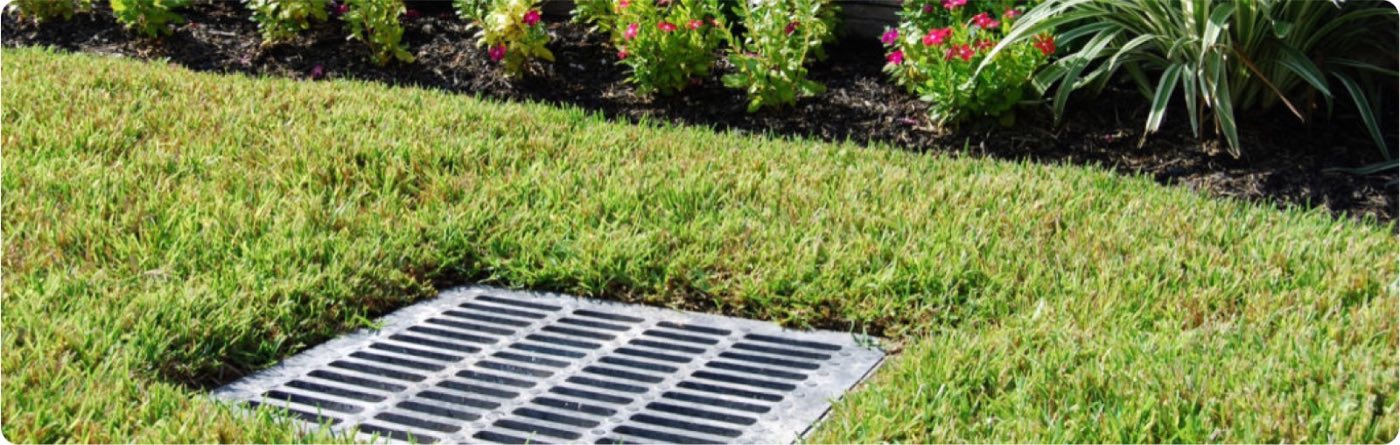
Drainage · 6 min read
Water is the most common thing we are called about, and the most commonly mis-diagnosed. Start with where it comes from, not where it sits.
Introduction
Standing water is the most common problem we get called about, and it is the one most often treated in the wrong place. People point at the puddle. The puddle is the symptom — the cause is almost always uphill of it.
On Piedmont clay this is worse than it would be on sandy soil, because clay drains slowly. Water that would soak away in an hour somewhere else sits on our ground for a day.
(01)
Before anything gets dug, work out the source. In our experience it is nearly always one of five things, and the fix is completely different for each.
(02)
A single downspout can deliver a startling volume of water to one spot in a storm. If yours discharge at the foundation and the ground there is soggy, that is your answer and it is an inexpensive one.
Piping downspouts underground and taking them out to daylight or into a drainage system solves a surprising share of the yard problems we are called about, and it costs a fraction of what people expect to spend.
(03)
Where ground falls the wrong way, regrading is the honest fix. You want a fall away from the house — a modest but consistent slope over the first several feet is the standard rule of thumb.
The trap here is moving the problem to your neighbour. Water has to go somewhere legitimate, and pushing it onto the property next door is both bad practice and a good way to end up in a dispute. Any grading plan needs an actual destination.
(04)
These get used interchangeably in conversation, and they do different jobs.
A catch basin is a collection point for water already pooling on the surface. A grate, a box, and a pipe leading away. It is the right answer for a low spot that collects.
A French drain is a perforated pipe in a gravel trench that intercepts water moving through the soil, before it reaches the place it is causing trouble. It is the right answer for a slope feeding water down toward a house or patio.
Both need somewhere to discharge. A drain that runs to a dead end is a buried puddle.
(05)
A badly planned patio makes drainage worse. A well planned one can improve it, because it is a chance to design falls deliberately rather than inheriting whatever the builder left.
Permeable paver systems let water through the surface into a stone reservoir beneath, rather than shedding it somewhere else. On a lot that is already struggling with runoff, that is a real advantage. Every <a href="/paver-patios">patio we build</a> gets its falls designed in, and where drainage work is needed we would rather do it as part of the project than come back to it.
(06)
A drainage assessment is mostly observation. Where does the ground fall, where do the downspouts go, where has the grass thinned or the moss taken hold, where is there silt left behind after a storm. Those marks tell you where the water travels when nobody is watching.
Our <a href="/yard-drainage-solutions">yard drainage service</a> starts there rather than with a catalogue of products.
(07) Questions
Related services
More from the blog
All articles →Costs & planning
Two patios the same size can differ enormously in price. Here is what moves the number, and which savings cost you more later.
Read →Materials
Both work here. But our clay and our freeze-thaw cycles push the answer one way more often than the other.
Read →Retaining walls
Almost every failed wall we are called to has the same three causes. None of them is the block.
Read →Free on-site estimate
Tell us what you have in mind. We come out, walk the ground with you, and put a clear written estimate in your hands.
Request an estimate
Send the details and we will come out, walk the ground with you, and put a clear written estimate in your hands. No cost, no obligation.